A Practical Guide to Drying Flowers in Humid Air: Key Points
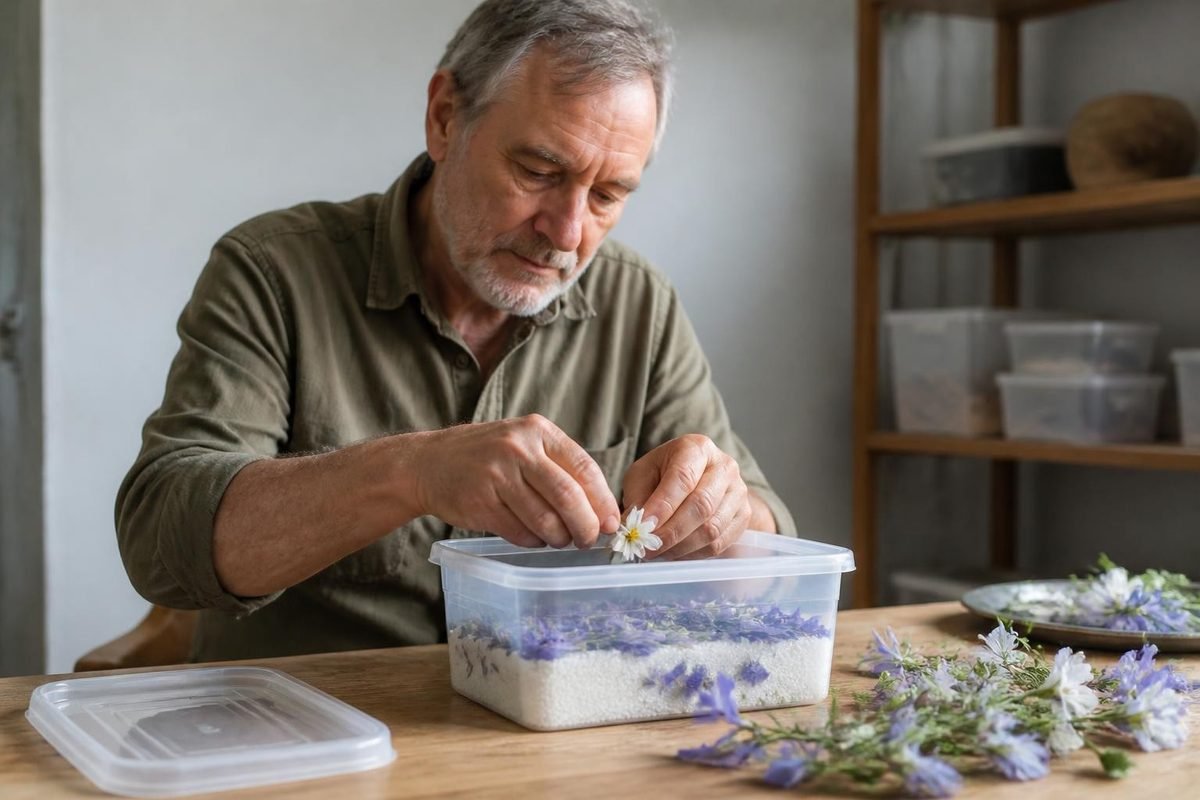
Dry blossoms in humid weather by placing them in a dry room with gentle airflow or by using silica gel. Work to remove moisture quickly, then store the flowers where damp air cannot reach them.
Select fresh flowers and set up a dry room
Gather flowers after dew or rain has dried. Choose blooms that are fresh and free of damage, not soft or fading. Strip leaves from the stems because leaves retain moisture and can make drying slower.
Use a small room with air conditioning or a dehumidifier if possible. Keep the windows closed while the equipment is running, and set a fan to move air gently around the flowers. Avoid bathrooms, damp basements, and windowsills that collect condensation.
Look over the room each day. If the air feels moist or condensation appears, move the flowers somewhere drier or run a dehumidifier. Preparing a suitable space helps make drying more reliable.
Air dry flowers in small bunches
Hanging is a good method for flowers such as lavender and statice. Tie a few stems together near their ends, keeping each bunch loose. Hang the flowers upside down and leave room between bunches so air can circulate on all sides.
Choose a spot out of direct sunlight, which may fade the flowers. Do not hang them in a crowded closet where the air is still and damp. Drying can take several weeks, depending on the flower type and room conditions.
Inspect the stems and petals often. They should feel crisp and dry, not cool, soft, or bendable. If mold develops, throw away the affected flowers. Do not use them in an arrangement.
Dry individual blooms with silica gel
Silica gel made for drying flowers absorbs moisture. It can help preserve the shape of single blooms that might flatten or lose their form when hung. Follow the product directions and use a container that closes tightly.
- Spread a layer of silica gel across the container’s bottom.
- Set the flowers on the gel, with space between each bloom.
- Add more gel gently around and over the petals to support their shape.
- Close the container and inspect the flowers according to the package instructions.
When the petals have dried, lift each flower out carefully and brush off any grains that remain. Keep silica gel away from children and pets. Do not use it to dry flowers that will be eaten.
Keep dried flowers dry and safe
Dried flowers can soften again if exposed to humidity. Keep them indoors in a dry place. For storage, put them in a sealed container with a packet of desiccant. Handle the petals with care because they may break even if the flower seems sturdy.
Answers to common drying questions
Is outdoor drying a good option?
It can be hard to dry flowers outside in humid weather because they may take moisture back in from the air. An indoor space where you can control conditions is more dependable.
How can I tell when a flower is fully dry?
Its petals should feel crisp, and its stems should no longer feel soft. Check the center of thicker flowers as well.
What should I do if I find mold?
Discard the moldy flower. Check nearby blooms and increase airflow around them.
Do dried blooms retain their color?
Some color change is normal. Keeping flowers away from direct sunlight can reduce fading.
A useful next read: set flowers guide